The Loss of the Unobserved Childhood: When Every Moment Becomes a Memory for an Audience
Discover how constant photo-sharing and documenting childhood can affect children’s privacy, autonomy, and digital identity—and how parents can preserve memories while respecting their child’s right to privacy.
When Living a Moment Becomes Less Important Than Capturing It
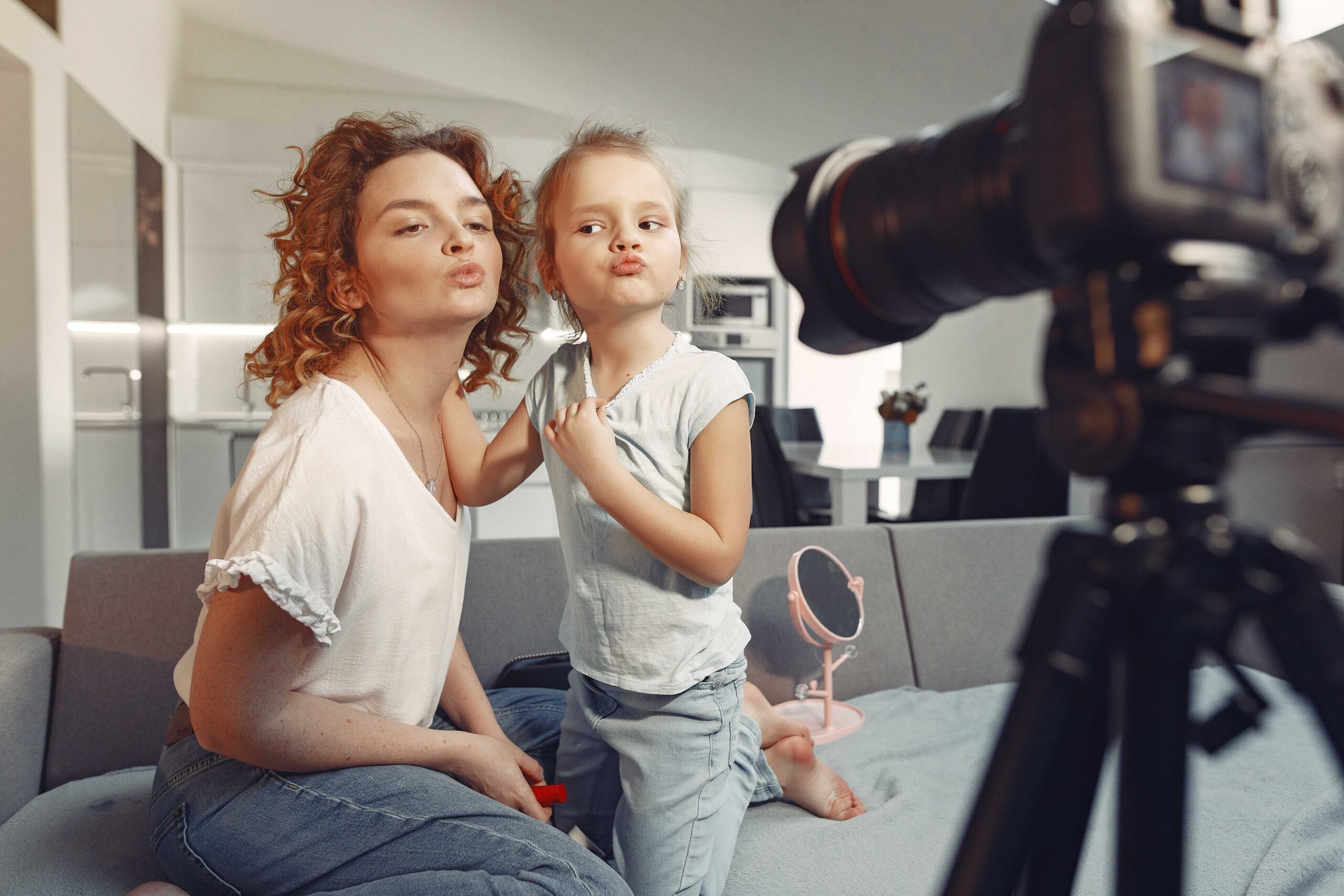
A child is dancing in the living room, covered in cake after a birthday party, or crying over a small disappointment. A parent instinctively reaches for a phone. The moment is photographed, perhaps recorded, and soon shared with family, friends, or a wider online audience. What begins as a loving attempt to preserve a memory can gradually become part of a larger habit: documenting childhood as it happens.
There is nothing inherently wrong with taking photographs or sharing happy family moments. Pictures help families stay connected, preserve milestones, and remember experiences that might otherwise fade. The question is not whether parents should take photographs, but whether every meaningful moment needs to become a recorded one.
Childhood has always included experiences that were never photographed, explained, or shown to anyone else. Children could be silly without an audience, make mistakes without creating a permanent record, and experience emotions without wondering how they appeared to others. Today, when cameras are almost always within reach and sharing takes only seconds, some of these private spaces are becoming harder to protect.
The concern is not that every photograph harms a child. It is that, when documentation becomes automatic, parents may unintentionally overlook a child’s need to experience life without being watched, recorded, or presented to an audience.
When a Child’s Life Becomes a Public Story
Parents often share pictures because they are proud, excited, or eager to keep loved ones involved in their children’s lives. Yet children may not fully understand who can see those pictures, where they might travel, or how long they could remain available.
Researchers use the term sharenting to describe parents sharing information, photographs, and other details about their children online. A 2024 systematic review by Tosuntaş and Griffiths examined 61 empirical studies on the subject, highlighting recurring questions about children’s privacy, parental decision-making, and children’s own perspectives on being shared online.
A family photograph may seem harmless in its original context, but its meaning can change once it leaves that setting. A funny expression shared among relatives might be circulated more widely. A photograph taken at school could reveal identifying details. A personal story shared to celebrate a child’s growth might later feel uncomfortable to the child who has to live with it.
Parents may see these posts as a collection of cherished memories. Children, however, may experience them as a personal story being told before they are old enough to decide how much of themselves they want the world to know.
The important distinction is between preserving a memory for the family and making a child’s life available for public viewing. These are not always the same thing.
The Child Who Begins to See Themselves Through an Audience
Children learn who they are through relationships. They notice how parents respond to their achievements, how friends react to their behavior, and how others treat their emotions. As they grow older, they also become increasingly aware of how they appear to other people.
When ordinary moments are repeatedly photographed, recorded, or shared, a child may begin to wonder whether an experience is simply something to enjoy or something that might be shown to others. Some children love the attention; others feel uncomfortable, embarrassed, or pressured to cooperate.
A 2019 qualitative study by Ouvrein and Verswijvel explored adolescents’ experiences with sharenting and their concerns about how parents’ posts affected the way they wanted to present themselves. Their findings highlighted the importance of adolescents having a say in what parents share about them.
This matters because a child’s sense of identity is still developing. The child who enjoys being photographed at six may feel differently at twelve. The teenager who once laughed at a funny family video may later wish it had remained private. Their feelings are not necessarily a rejection of their parents’ affection; they may simply reflect a growing need for control over their own identity.
A child should not have to perform happiness, repeat a funny action, or hide an uncomfortable reaction because a parent wants to capture the perfect moment. Sometimes, the most meaningful response is to let the experience unfold without asking the child to become part of a picture.
The Right to Make Mistakes and Outgrow Them
Growing up involves experimentation. Children try new interests, express exaggerated emotions, misunderstand situations, make awkward choices, and gradually learn what feels right for them. These experiences are part of becoming an individual.
But when embarrassing moments are recorded and shared, a temporary experience can become a lasting digital reminder. A toddler’s tantrum may be amusing to adults today, but the child may not find it funny years later. A teenager’s vulnerable moment may be understandable within the family, yet uncomfortable when viewed by people outside it.
The deeper issue is not simply embarrassment. It is the child’s opportunity to change without having an earlier version of themselves continually brought back into view.
Children deserve the freedom to outgrow their mistakes, revise their opinions, explore different identities, and leave certain phases of life behind. Parents cannot predict how a child will feel about today’s posts in the future. What seems affectionate or amusing now may feel intrusive later.
This does not mean parents must erase every trace of childhood. It means they should pause before turning a child’s vulnerable moment into content, especially when the moment involves distress, humiliation, discipline, private conversations, or information the child may not want others to know.
A memory can be valuable without being public.
When Affectionate Sharing Crosses Into Unwanted Exposure
Parents may assume that their children are comfortable with online sharing because they are young, because the pictures are positive, or because they do not object. But silence is not necessarily consent. Younger children may not understand the consequences of sharing, while older children may find it difficult to challenge a parent’s decision.
A 2022 study published in the Proceedings of the ACM on Human-Computer Interaction surveyed 493 parents of young children in the United States about sharing children’s photographs on social media. It explored the relationship between parental sharing practices, privacy concerns, and children’s involvement in decisions about their images.
The study reflects a central dilemma of sharenting: parents make many decisions about their children’s digital presence before children are capable of understanding or participating in those decisions.
The practical risks also deserve attention. Photographs can reveal school names, uniforms, locations, daily routines, or other identifying information. Public posts may be copied or redistributed beyond the intended audience, and privacy settings cannot guarantee complete control over where an image goes.
The answer is not to frighten parents away from sharing every family photograph. It is to recognize that a child’s digital privacy deserves the same thoughtful protection as their privacy at home. Parents can celebrate a child’s achievements without disclosing every detail of their life, and they can stay connected with loved ones without making every moment public.
A Child’s Image Is Also a Question of Consent
As children mature, they begin to understand their preferences, boundaries, and the difference between what they are comfortable sharing privately and what they want others to see. Parents can support this development by treating consent as an ongoing conversation rather than a one-time question.
For a young child, this may mean noticing discomfort when a camera appears and avoiding photographs of vulnerable moments. As children grow older, parents can ask before posting pictures, explain who will see them, and accept a child’s request not to share something.
A child’s agreement should not become a demand for approval of every family decision. Parents still have responsibilities for safety and well-being. But when sharing is optional and concerns the child’s personal image or story, involving the child helps teach a valuable lesson: their feelings and boundaries matter.
UNICEF’s guidance on sharenting similarly encourages parents to think carefully about children’s privacy, identifying details, and whether a child is comfortable with what is being shared.
This practice also teaches children how to respect other people’s boundaries. When they see parents asking permission before posting a photograph, they learn that another person’s image is not automatically theirs to publish—even when that person is a sibling or friend.
The Pressure on Parents to Document Everything
It is easy to frame this conversation as a problem caused by careless parenting, but many parents are responding to pressures that have become part of modern family life. Social media rewards updates, milestones, and memorable images. Family members living far away may rely on photographs to feel involved. Parents themselves may worry that if they do not document a moment, they will lose a piece of their child’s childhood.
There is also an emotional reason behind the camera: childhood passes quickly. Parents know that their children will grow, change, and eventually become independent. Photographs offer a way to hold on to moments that cannot be repeated.
That desire is understandable. The challenge comes when preserving memories begins to compete with experiencing them. A parent who is busy finding the right angle may miss the child’s spontaneous reaction. A family outing can become an exercise in collecting photographs rather than enjoying time together. A celebration may feel incomplete unless it has been documented.
Parents do not need to stop taking pictures. Instead, they can make room for a healthier balance: some moments can be photographed, some can be shared privately, and some can remain entirely within the family’s memory. The value of a moment does not depend on whether it can be revisited on a screen.
Making Room for Moments That Belong Only to the Child
Protecting an unobserved childhood does not require strict rules or a phone-free family at all times. It begins with small, intentional choices.
Parents can decide in advance which kinds of moments should remain private, such as a child’s distress, discipline, medical experiences, or embarrassing mistakes. They can avoid sharing identifiable details about schools, routines, and locations. They can use private family channels where appropriate, while remembering that even private messages and groups can be copied or forwarded.
Most importantly, parents can let children experience moments without immediately turning them into photographs. During play, conversations, family outings, and quiet everyday routines, putting the phone away allows parents to give their full attention to the child in front of them.
As children grow, parents can review old posts with them and remove content that the child no longer wants online, wherever possible. They can also model thoughtful sharing by asking themselves a simple question before posting: Would my child feel respected if they saw this image or story years from now?
These choices do more than protect privacy. They communicate that a child does not have to be entertaining, impressive, adorable, or presentable to deserve attention. Their ordinary experiences have value even when nobody else sees them.
The Childhood We Preserve by Not Recording Everything
A child’s life is not a family archive to be completed, nor is every milestone a story that needs an audience. Childhood belongs to the child as much as it belongs to the parents who cherish it.
The photographs we take can become treasured reminders of love, connection, and change. But the moments we leave unrecorded matter, too: the conversation that stays between parent and child, the mistake that becomes a lesson rather than a joke, the afternoon of unstructured play, and the emotion a child is allowed to feel without being asked to smile for the camera.
As children grow into people with their own preferences and identities, they need room to decide what parts of themselves they want to share. Giving them that room does not diminish parental love. It helps make that love respectful, secure, and responsive to who they are becoming.
Perhaps the most important memory parents can give their children is not a perfectly documented childhood, but the feeling that they were allowed to live it freely.
Capture the memories that matter, but leave room for the moments that need no record. Sometimes, the most loving way to preserve childhood is to put the camera down, join the moment, and let it belong entirely to your child.