The Gift of Strategic Autonomy: Why Sometimes the Best Thing You Can Do for Your Child Is Step Back

There is a particular kind of parenting exhaustion that comes from always being needed.
The calendar is carefully planned. Homework is monitored. Activities are selected. Friendships are observed. Problems are anticipated before they become problems. Even boredom can feel like something a good parent should solve. In an effort to give children every possible advantage, many parents have gradually taken responsibility for experiences that children once learned to navigate themselves.
The intention is rarely control. More often, it is love mixed with anxiety about whether we are doing enough.
But childhood does not develop only through what adults provide. It also develops through what children are allowed to discover, attempt, struggle with, and eventually solve on their own. This is where the idea of strategic autonomy becomes important: not withdrawing from a child’s life, but deliberately stepping back from the parts of it that a child is developmentally capable of managing.
The goal is not to become less caring. It is to become more intentional about when our involvement is necessary—and when our stepping back may actually give a child something valuable.
When Boredom Becomes a Developmental Opportunity
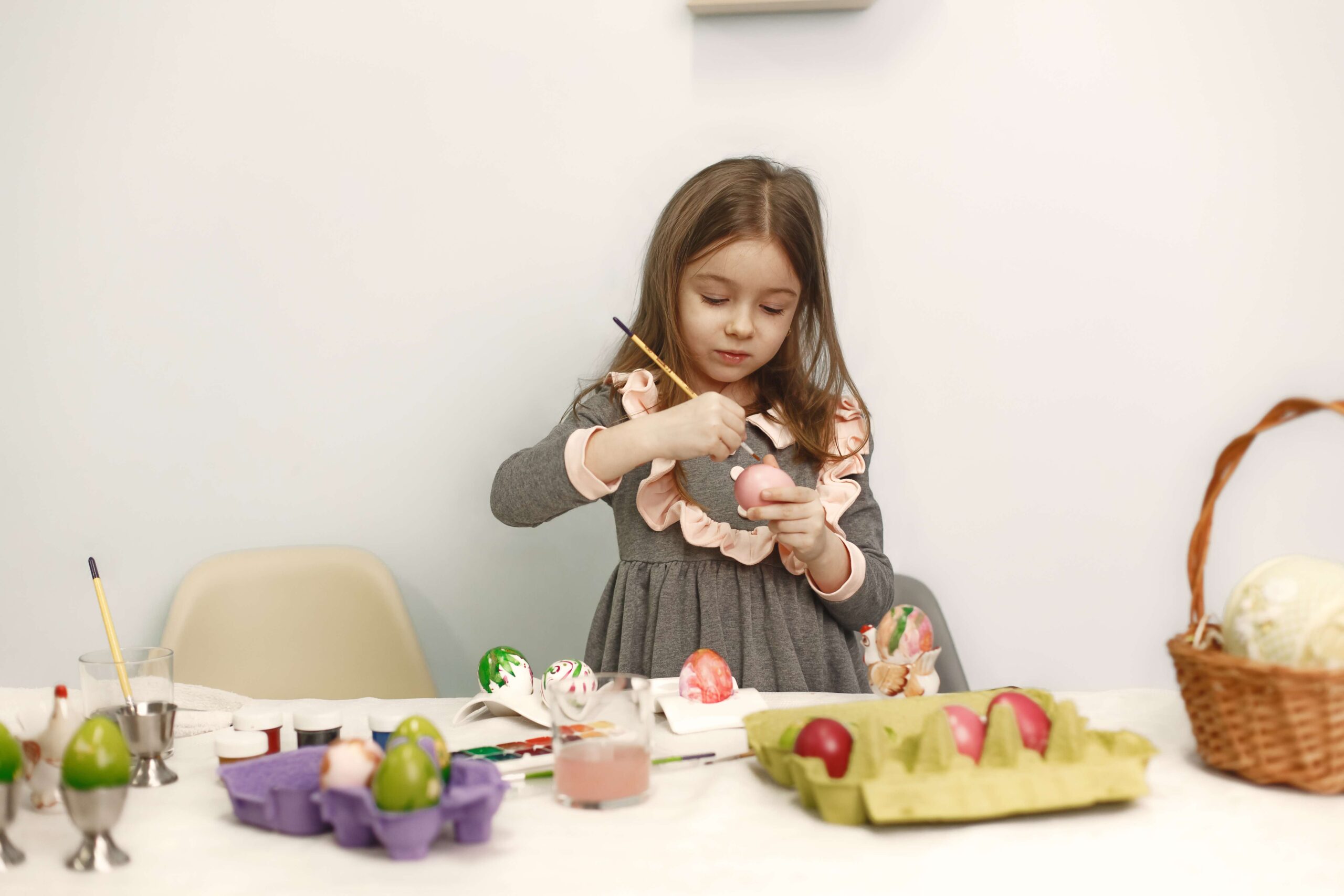
For many children today, an empty afternoon is almost an unfamiliar experience. There is always a screen, an activity, a lesson, a notification, or an adult ready with a suggestion.
Yet unstructured time has developmental value precisely because nobody has decided what the child should do with it.
The American Academy of Pediatrics has emphasized the importance of free, child-directed play and unscheduled, independent, nonscreen time. Play gives children opportunities to explore, make decisions, solve problems, regulate their behavior, and follow their own curiosity. These experiences contribute to the development of executive-function skills—the mental abilities involved in focusing attention, controlling impulses, shifting between tasks, and working toward goals.
That does not mean boredom automatically makes children more creative or that every moment of boredom produces measurable cognitive gains. The more useful insight is simpler: when adults do not immediately fill every empty space, children have an opportunity to decide what comes next.
A child who complains, “I’m bored,” does not necessarily need another activity. Sometimes the more developmentally useful response is, “I wonder what you will come up with.”
The resulting fort, drawing, imaginary game, half-finished invention, neighborhood adventure, or simply a period of quiet may look unproductive to an adult. But the child is practicing something important: generating possibilities without someone else supplying them.
The Hidden Cost of Solving Everything
There is another reason stepping back matters.
When parents routinely solve problems before children have the opportunity to attempt them, children may receive fewer chances to experience themselves as capable problem-solvers.
A forgotten school item is delivered. A disagreement with a friend is immediately investigated. A difficult assignment becomes a parental project. A disappointing result is quickly explained away. A child becomes frustrated, and an adult rushes in to remove the frustration.
None of these responses is inherently harmful. Parents sometimes need to intervene, and children need support. The concern arises when intervention becomes the default rather than the exception.
Research on helicopter or overparenting has found associations with difficulties involving autonomy, self-efficacy, and psychological adjustment, particularly among adolescents and emerging adults. At the same time, the research is not simple enough to conclude that intensive parenting directly causes anxiety or depression; some studies suggest that parents may also become more controlling in response to a child’s existing difficulties.
That distinction matters.
The message is not that parents should care less. It is that children need repeated experiences of discovering, “I can handle this.”
Self-confidence is not created entirely by being told that a child is capable. It is built through lived experiences of capability.
A child who struggles to assemble something and eventually figures it out learns more than how to assemble it. They learn something about themselves.
The Parent’s Guilt Can Be Part of the Problem
Perhaps the hardest part of strategic autonomy is not knowing when to step back. It is tolerating the feeling that we should be doing more.
Parenting culture can make constant involvement look like evidence of commitment. A parent who knows every assignment, schedules every activity, monitors every friendship, and responds to every inconvenience can easily feel more responsible than a parent who allows a child some room to figure things out.
But constant involvement can become exhausting.
Research on parental burnout increasingly points to the importance of the parent’s own well-being and family environment. A 2021 study spanning 42 countries and more than 17,000 parents demonstrated that parental burnout is a substantial cross-cultural phenomenon, while newer longitudinal research continues to examine the two-way relationship between parental burnout and children’s behavior.
This makes stepping back valuable for another reason: children do not need parents who are endlessly available at the expense of themselves.
They also need to see adults who have identities beyond parenting.
A parent who reads, works, rests, maintains friendships, invests in a marriage or partnership, pursues an interest, or simply sits quietly for a while is not demonstrating indifference. They are demonstrating that healthy relationships can contain both connection and individuality.
Children are not meant to become the sole center of an adult’s emotional universe.
They are meant to become increasingly capable members of a family in which everyone’s needs and responsibilities matter.
Let Children Have Some Problems That Belong to Them
One of the clearest places to practice strategic autonomy is in children’s relationships with other children.
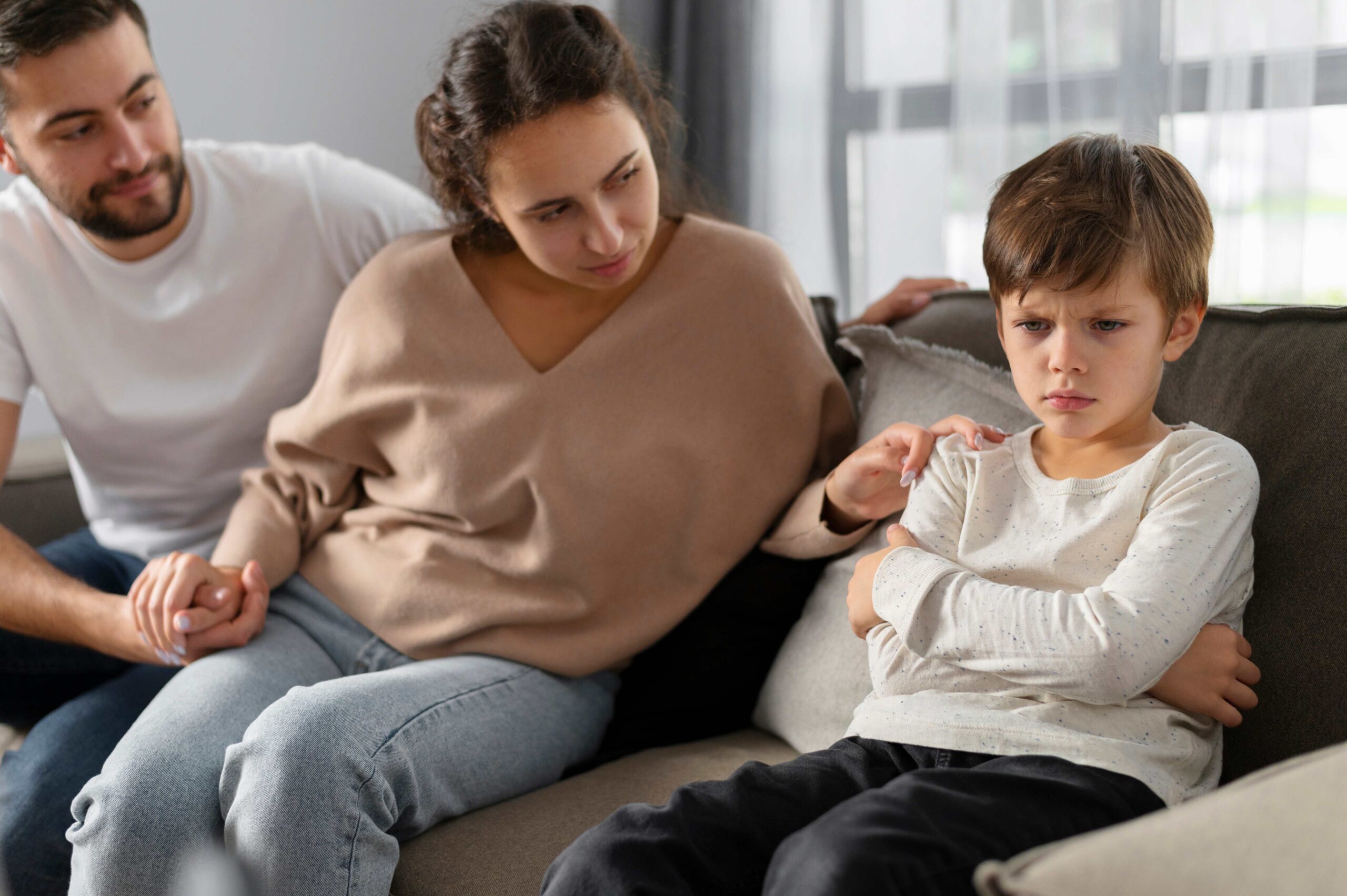
When two children disagree over a game, a toy, a rule, or who gets to go first, an adult may immediately see a problem that needs fixing. But many ordinary disagreements are also opportunities for children to practice negotiation.
Who gets the next turn?
Can the rules change?
What happens if one person refuses?
Should they continue playing together?
These are small social laboratories.
Research on play emphasizes that child-directed play creates opportunities for social-emotional learning, self-regulation, communication, and problem-solving. The AAP has specifically highlighted the value of allowing children to lead their play rather than having adults direct every aspect of it.
This does not mean ignoring bullying, exclusion, aggression, or genuine distress. Those situations require adult attention.
The distinction is between protecting a child from harm and protecting a child from every uncomfortable social experience.
A child who experiences a disagreement and later works it out may discover something a parent could never teach through a lecture: relationships can be repaired.
Strategic Autonomy Changes as Children Grow
Stepping back does not look the same at every age.
For a young child, it might mean allowing independent play while remaining close enough to provide safety and reassurance. The parent creates the environment but does not constantly direct what happens inside it.
For a school-age child, autonomy might involve packing a school bag, remembering an assignment, choosing between appropriate options, organizing a small part of the morning routine, or attempting homework before asking for help.
For a teenager, the territory becomes much more personal.
It may mean allowing them to manage portions of their schedule, make age-appropriate decisions about appearance and friendships, experience the consequences of procrastination, or work through an ordinary disagreement without immediately calling another parent or teacher.
The parent’s role gradually shifts from manager to consultant.
That transition can be uncomfortable because adolescence often arrives before parents feel emotionally ready to relinquish control. Yet growing independence is not a rejection of the parent-child relationship. It is one of the purposes of that relationship.
The AAP’s recent guidance on healthy emotional development similarly emphasizes giving children opportunities for choices and independence while maintaining a secure, supportive relationship.
The question gradually changes from, “How do I make sure my child gets this right?” to, “How much of this can my child reasonably learn to manage?”
The Digital World Changes the Meaning of Boredom
There is, however, an important complication for modern parents.
Stepping back does not mean simply leaving a child alone with unlimited access to a smartphone.
Previous generations could encounter boredom and eventually wander toward a book, bicycle, backyard game, craft project, or conversation. Today, the fastest escape from boredom is often already in a child’s hand.
That is why strategic autonomy in the digital age requires environmental boundaries rather than constant behavioral management.
Parents may decide that certain parts of the day are screen-free, keep devices outside bedrooms, protect family meals from notifications, or create physical spaces where children can play without digital stimulation. The objective is not to make technology the enemy. It is to ensure that technology does not become the automatic answer to every moment of discomfort.
The AAP has long recommended protecting free play and reducing reliance on passive entertainment, emphasizing that children benefit from opportunities to create, explore, reflect, and decompress.
In other words, parents may need to manage the environment so that children have more freedom to manage themselves within it.
That is a very different kind of parenting from monitoring every action.
Independence Needs an Emotional Home Base
There is one important boundary that should never be lost in conversations about stepping back.
Strategic autonomy is not emotional withdrawal.
A child should not have to become independent because nobody is available to help. A teenager should not have to solve a serious emotional problem alone. And a young child should never be expected to navigate situations beyond their developmental capacity simply in the name of resilience.
The strongest version of autonomy grows from security.
Children can explore farther when they know there is somewhere safe to return to. They can take more social and intellectual risks when they know their parents will listen without immediately judging or taking over. They can tolerate mistakes when failure does not threaten their sense of belonging.
This is why the goal is not under-parenting.
It is less unnecessary management and more purposeful connection.
The parent remains emotionally available while becoming less involved in every small decision.
The Gift May Be the Space We Leave Behind
Modern parenting often asks, “What more can I give my child?”
Perhaps another question deserves equal attention:
What can I stop doing for my child that my child is ready to begin doing for themselves?
Maybe it is solving the forgotten homework problem. Maybe it is settling an ordinary disagreement. Maybe it is filling every empty afternoon. Maybe it is checking a message that does not require an answer. Maybe it is stepping in the moment frustration appears.
These small moments can feel insignificant. Collectively, they are where autonomy grows.
A child does not become resilient because a parent repeatedly tells them to be resilient. They become resilient through manageable experiences of uncertainty, effort, disappointment, decision-making, repair, and success—with a secure relationship waiting in the background.
The best kind of stepping back is therefore not a retreat from parenting.
It is a change in the way we parent.
We remain close enough to protect, guide, listen, and reconnect. But we leave enough space for our children to discover their own capabilities.
Because sometimes the most meaningful thing a parent can give a growing child is not another lesson, another activity, or another solution.
It is the quiet confidence of saying:
“I am here if you need me. And I trust you to try.”