
The Jokes Children Never Forget: How Mockery Shapes a Child’s Mind, Identity, and Future
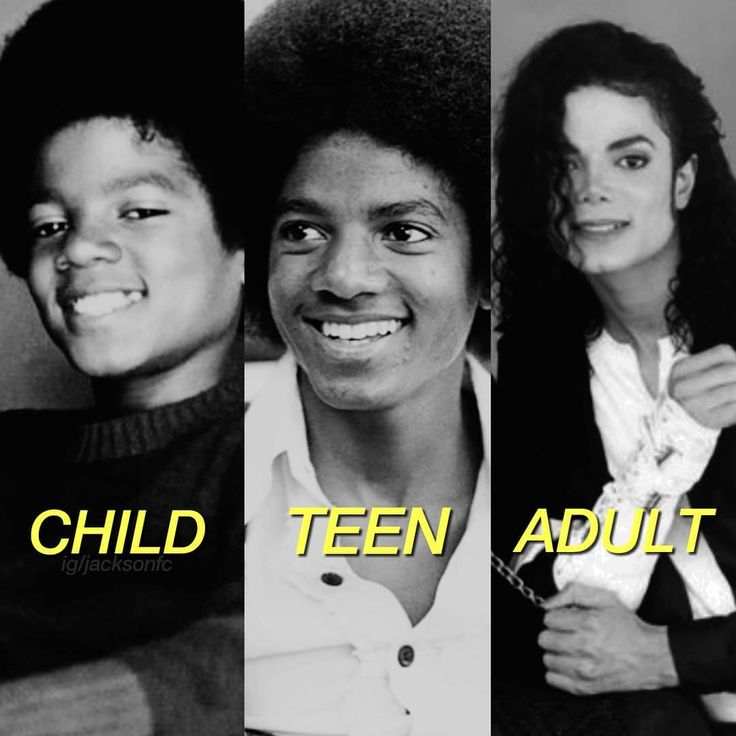
What childhood ridicule does to a developing mind, how it quietly shapes adult identity, and what the life of Michael Jackson reveals about wounds that applause cannot heal.
When Humor Crosses a Line Children Cannot Understand
There are few things in parenting that appear as harmless—and yet can leave such lasting emotional marks—as mockery.
It rarely begins with cruelty. More often, it begins in laughter. A child mispronounces a word at the dinner table and everyone bursts into laughter. A toddler dances awkwardly and someone pulls out a phone, replaying the moment for relatives. A young boy becomes emotional and is told he is “too dramatic.” A little girl becomes self-conscious about a feature on her face, only to hear a playful nickname repeated often enough that it becomes part of how the family identifies her.
In most homes, these moments are not created with harmful intent. They are woven into everyday life, into family humor, into stories told at gatherings, into jokes that adults remember with affection. And yet, what is often forgotten is that children do not experience these moments through an adult mind. They experience them while their identity is still under construction.
And that changes everything.
A child is not merely learning language, behavior, and social rules. A child is learning who they are. Long before children can describe self-esteem, emotional safety, shame, or insecurity, their brains are constantly gathering evidence to answer some of life’s most foundational questions: Am I safe here? Am I accepted? Am I enough? Is there something about me that makes me lovable—or laughable?
When a child is repeatedly mocked—even unintentionally—the answers to those questions can begin to shift in deeply consequential ways.
What a Child Actually Hears When Adults “Just Joke”
What adults may dismiss as harmless teasing, a child’s nervous system may register very differently. Developmental psychologists have long observed that children are especially sensitive to social humiliation, particularly when it comes from attachment figures such as parents, siblings, grandparents, or caregivers. These are not merely the people a child loves; they are the people through whom a child learns what love feels like.
When ridicule comes from those sources, the emotional experience is rarely processed as “They’re joking.” More often, it is processed as: “Something about me is not safe to show.”
And once that belief begins to form, children often start adjusting themselves—not consciously, but instinctively—to avoid experiencing that pain again.
What Science Now Tells Us About Emotional Mockery
Science increasingly confirms what many adults only realize years later.
Research on Adverse Childhood Experiences (ACEs) has consistently shown that repeated emotional humiliation—being insulted, mocked, criticized, or shamed by caregivers—activates the same long-term stress systems associated with other significant childhood adversities. In one of the largest adolescent health studies in the United States, 76.1% of high school students reported experiencing at least one adverse childhood experience, while 18.5% reported four or more. Emotional abuse—including being insulted, put down, or humiliated—was among the most commonly reported experiences.
More strikingly, a recent 2025 study examining childhood adversity and adult mental health found that among multiple forms of childhood adversity, being repeatedly insulted by parents emerged as one of the strongest predictors of anxiety in adulthood.
Think about that for a moment. Not abandonment, not physical injury, not neglect But words, tone, ridicule.
The comments many adults still dismiss as “I was only joking.”
Another 2025 analysis of adolescent mental health found that children who were frequently insulted, humiliated, or verbally degraded by caregivers showed significantly higher levels of emotional dysregulation, anxiety, behavioral difficulties, and social withdrawal compared with peers.
The message from modern psychology is becoming impossible to ignore:
Emotional wounds often do not look like wounds. And that is precisely what makes them so easy to miss.
The Quiet Ways Mocked Children Learn to Survive
A child who is mocked does not always become visibly broken.
Sometimes that child becomes quiet. Sometimes they become “mature for their age.” Sometimes they stop asking questions. Sometimes they stop dancing in front of others. Sometimes they stop crying where anyone can see. And sometimes, perhaps most deceptively, they become exceptional.
They become the child who never wants to make mistakes. The child who rehearses every answer before speaking. The child who laughs at themselves before anyone else can. The child who reads every room before expressing an opinion. The child who seems confident, charming, and high-achieving—but privately lives with an exhausting fear of embarrassment.
What often looks like confidence can sometimes be carefully engineered emotional survival.
When Childhood Mockery Becomes an Adult Identity
Researchers studying emotionally humiliated children have repeatedly found higher rates of perfectionism, people-pleasing behavior, body-image disturbance, chronic self-criticism, and difficulty forming secure adult relationships. Long-term ACE studies further show that individuals exposed to multiple emotional adversities in childhood face significantly higher lifetime risks of depression, anxiety disorders, substance misuse, chronic stress-related illnesses, and suicidal ideation.
This is why ridicule around appearance can be especially powerful. Physical features become part of identity early in life. A repeated comment about a child’s nose, their teeth, their weight, their voice, their skin, their height, or the way they walk may last only seconds in the mind of the adult who says it.
But to a child, these comments often become internal mirrors.
And once children begin seeing themselves through the lens of ridicule, many spend years trying to correct flaws that may never have existed—except in the comments they once heard.
When Public Success Cannot Heal Private Childhood Wounds
This is perhaps why some of the most powerful examples of childhood emotional wounds are not found in clinical journals alone, but in public lives.
Few lives illustrate this more profoundly than that of Michael Jackson.
To the world, Michael Jackson became one of the most extraordinary performers in modern history. His talent, discipline, artistry, and influence remain nearly unmatched. He transformed music, performance, choreography, and popular culture in ways few artists ever have.
And yet behind the brilliance was a child who, throughout his life, spoke openly about growing up under intense emotional pressure, criticism, fear, and humiliation—particularly within his own family environment.
The Story Behind Michael Jackson’s Nose
Among the stories that emerged repeatedly in interviews was one detail that the world would later become obsessed with: his nose.
Michael spoke candidly about being mocked about his appearance during childhood. What may have seemed like teasing to others appeared to become something far more personal to him. Over time, the insecurity surrounding his face—and especially his nose—became one of the most discussed aspects of his adult life. The surgeries, the changing features, the public scrutiny—all became global conversation.
But long before the surgeries, long before the fame, long before millions of people had opinions about his appearance, there was simply a child learning a painful lesson:
How I look affects how I am treated.
And when that lesson is learned early—especially at home—it can shape not just self-image, but self-worth.
Recent global discussion surrounding the upcoming Michael biopic has once again brought renewed attention to Michael’s childhood, the relentless performance demands placed upon him, and the emotional environment that shaped him long before the world ever knew his name.
Some Children Do Not Break—They Become Extraordinary
What many psychologists point out is that children who experience ridicule do not always break visibly.
Sometimes…they adapt, they master, they perfect, they entertain, they achieve.
They become so extraordinary that the applause becomes louder than the insecurity.
But applause is not the same as healing. Success does not erase shame. Perfection does not repair humiliation.
And admiration from the world cannot always silence voices first heard at home.
The Responsibility Every Parent Carries
For parents, this may be the most important lesson of all.
Children do not need parents who never make mistakes. They need parents who understand the weight of their words. They need homes where vulnerability is protected, not performed for laughs. They need to know that their tears will not become dinner-table stories, that their insecurities will not become family nicknames, and that their developing identity will not become entertainment—even unintentionally.
Because children may forget many things from childhood.
They may forget toys. They may forget vacations. They may forget what was served at birthdays.
But they rarely forget how the people they trusted made them feel about themselves.
And before any parent laughs at a child’s appearance, their sensitivity, their awkwardness, their mistakes, or their fears—even lovingly, even playfully—it may be worth asking one quiet question:
Will this become a family memory…
or an inner voice they carry for the rest of their life?